
Birth of the Company
At a meeting of the Abingdon Improvement Association held in late 1924, it was discussed by the members that the village needed quicker responses to fires. Records indicate that the association concerned itself with a wide range of problems they faced at that time. Some of their topics for discussion were things we take for granted today, such as paved roads for safe travel, telephone service, and electricity. In fact, the town did not get electricity until 1927. Fire protection was a topic of great concern that night in late 1924, since the closest fire protection was in Bel Air and Aberdeen. There weren’t many fires in those days—mostly field and woods fires—but when there was a dwelling or barn fire, it was of great concern because of the delay in communication and the distance that had to be traveled over unimproved roadways, particularly in the winter months when responding often meant traveling on uncleared roads.
The original idea was to form a Fire Brigade, a first line of defense until the arrival of the nearest fire company. This idea was short-lived, and a new suggestion emerged: “Let’s get our own fire engine and become a fire company.” The idea of starting a fire company came up during a meeting in 1925, as described by past Chief Arnold Harwood, who was a young lad at the time. The meeting took place in Lester Tucker’s store, located across from the present McComas Funeral Home in Abingdon, as it was the only public meeting place in town. Some of the people in attendance that night were Lester Tucker, Joe Babka, Eugene McComas, Kennard McComas, Norman Davis, Harry Moulsdale, Will Harwood, George Price, Roy Stifler, and other local citizens. It was said that as the discussion became somewhat heated, Will Harwood stood up and said, “Let’s not carry buckets, let’s get a real fire engine.” That moment is credited as the birth of the Abingdon Fire Company. Will’s enthusiasm continued—he later served as Chief for seven of the following ten years.
The Early Years
In 1926, a new Dodge chassis was purchased, and a body was built in Wilmington, Delaware. It had three 40-gallon chemical tanks piped to two booster reels mounted top-side. It carried no water except in the chemical tanks. The tanks contained five pounds of soda mixed with water and a four-ounce bottle of sulfuric acid that, when broken, would charge the tank to about 350 psi. The mixture was uniformly blended by a four-bladed paddle cranked by hand as the engine approached the fire. The engine carried enough spare soda and acid to charge the tank three times. Extra water to recharge the tanks, if necessary, came from the homeowner’s well or a barrel kept on the property for fire protection. When that water was depleted, the fire had better be out.
The engine was delivered that year and housed in a wooden lean-to attached to Lester Tucker’s barn. During that time, fire calls were received by local telephone operators, who forwarded the information to Tucker’s store. (This method of notification continued until the mid-1950s, when it was replaced with the advent of the first Fire Headquarters.) Mr. Tucker would pull the engine out and sound its siren to notify the rest of the firemen.
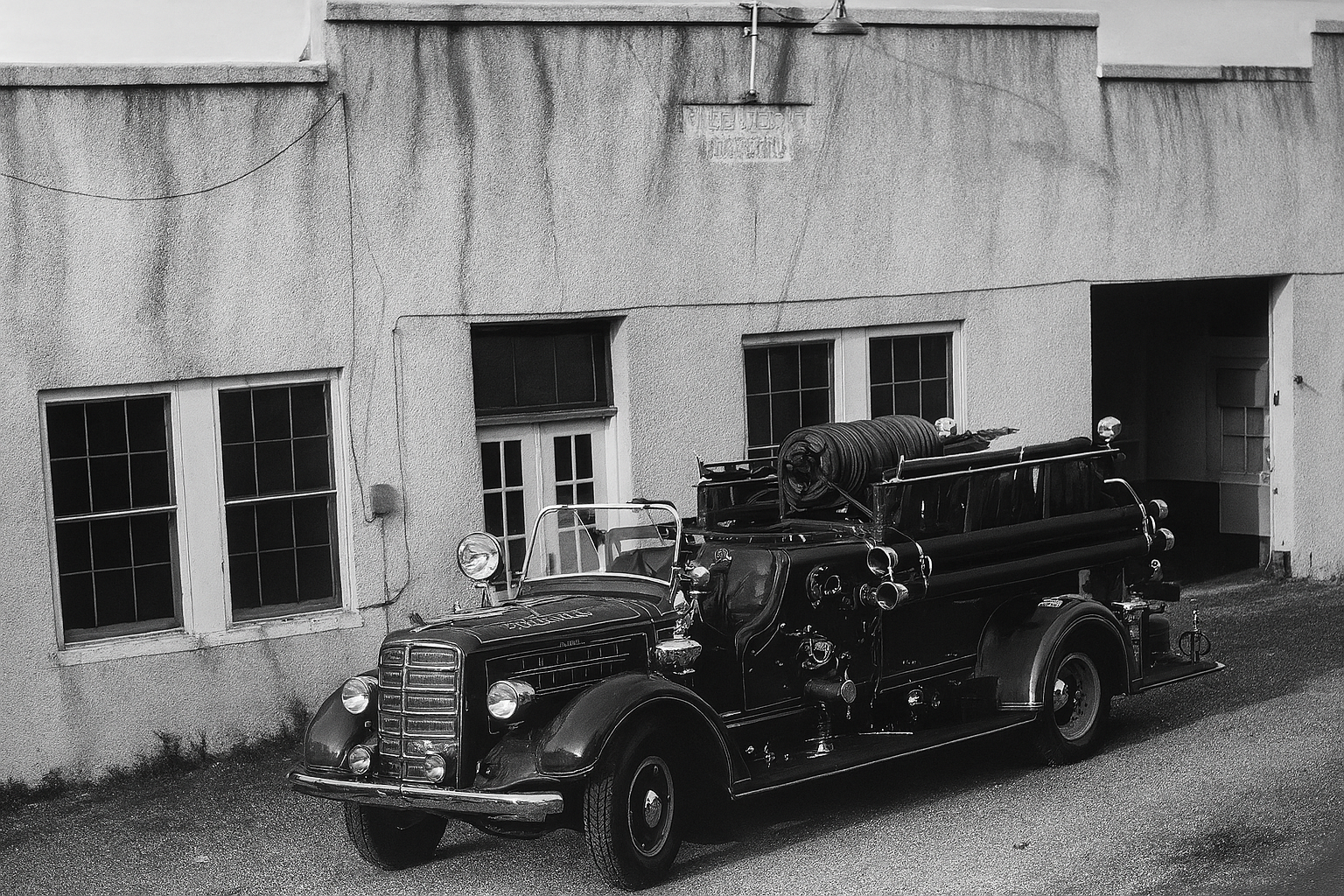
In 1930, construction of a new firehouse on Abingdon Road across from Cokesbury Methodist Church was completed. It wasn’t until then that the firemen had access to protective clothing. Protective gear was purchased after an incident at a barn fire where an object fell from the roof and struck a fireman on the head. At the next company meeting, they voted to buy four metal helmets and four pairs of rubber boots. Also that year, a new chemical engine was purchased to replace the previous one. This new engine had the latest refinements: a 100-gallon-per-minute rotary pump piped to a 100-gallon water tank and three chemical tanks supporting two 1″ booster reels. The fire company progressed through the 1930s, answering about thirty-five calls per year. In 1940, it became necessary to replace the chemical truck, and the company purchased a 1940 Model EH50 Open Cab Mack Pumper.
Changes During the '50s and '60s
In 1950, the company expanded the firehouse with two new engine bays to accommodate a new 1,200-gallon tanker mounted on a 1950 Chevrolet chassis, at a cost to the company of $1,900. A member of the company who was a metalsmith built the body for the cost of the materials.
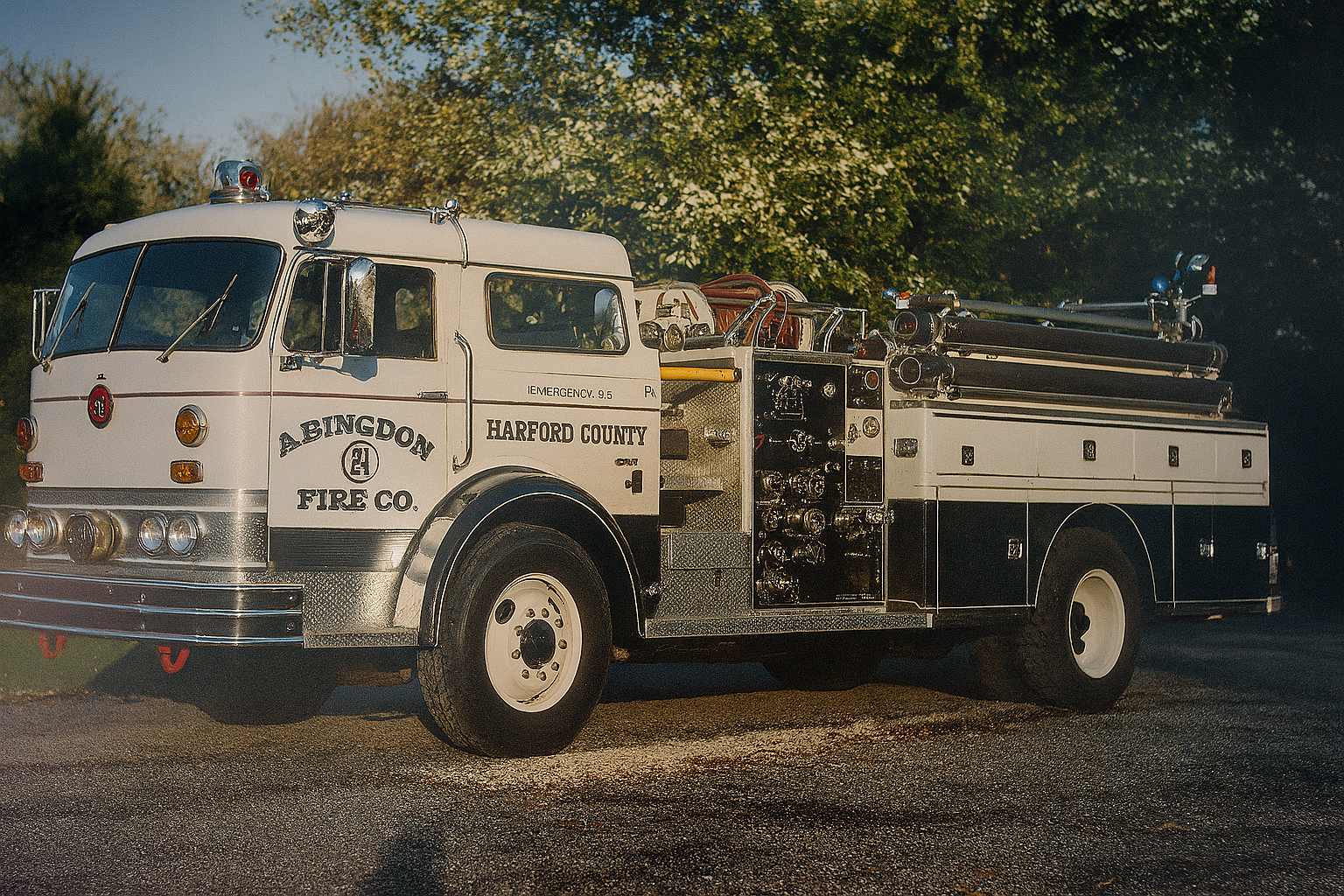
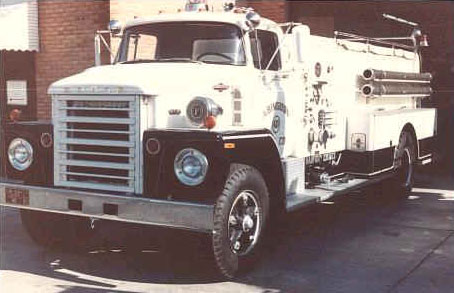
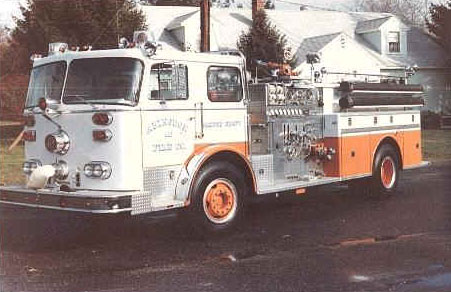
In the mid-1950s, the local population began to increase, and the company voted to build a second fire station in the Long Bar area. The second station was completed in 1958. The 1940 Mack Pumper was moved to that station, and a new 1957 B Model Mack Closed Cab Pumper was purchased, becoming the pride of the company. In 1959, the company added a light-duty rescue truck built on an International chassis, followed by a 17-foot aluminum rescue boat the next year. In 1965, another new Mack Pumper was purchased to replace the aging 1940 Open Cab Mack at the Long Bar station.
In 1968, after much debate, the company voted to purchase its first ambulance—a 1968 coach mounted on an Oldsmobile chassis. The company had already been responding to all automobile and truck accidents and rescues in its territory since the purchase of the rescue truck nearly ten years earlier. With a large number of personnel already trained, the company was ready to begin ambulance service. In the first year, the ambulance responded to 325 calls—much to the relief of the Joppa-Magnolia, Bel Air, and Aberdeen fire companies.
Master Plan for the '70s and '80s
In the 1970s, the fire company began to feel the impact of Harford County’s new Master Zoning Plan, created to manage future industrial and residential development. This plan encompassed the area from Bel Air south through the Route 24 and Route 152 corridor, west to the Baltimore County line, and east to Havre de Grace—placing Abingdon at the center of projected growth. As a result, increasing the company’s resources became a priority.
During the 1970s, the company built a third fire station in the Edgewood area of Willoughby Beach, added two engine bays and an administrative area at the Abingdon station, replaced the 1957 and 1965 engines, added a heavy-duty rescue truck, and purchased a new tanker with enhanced pumping capabilities.
By the 1980s, the area’s growing population led to a sharp increase in emergency calls. EMS calls approached 2,000 annually, while fire calls neared 1,000. During this decade, the company added a ladder truck and another ambulance to its growing fleet.
Evolution of the Company
The 1990s brought significant challenges, including the need to replace aging equipment, recruit additional members, and expand facilities. These challenges were met through the tireless efforts of the membership, financial support from the community, and assistance from Harford County Government.
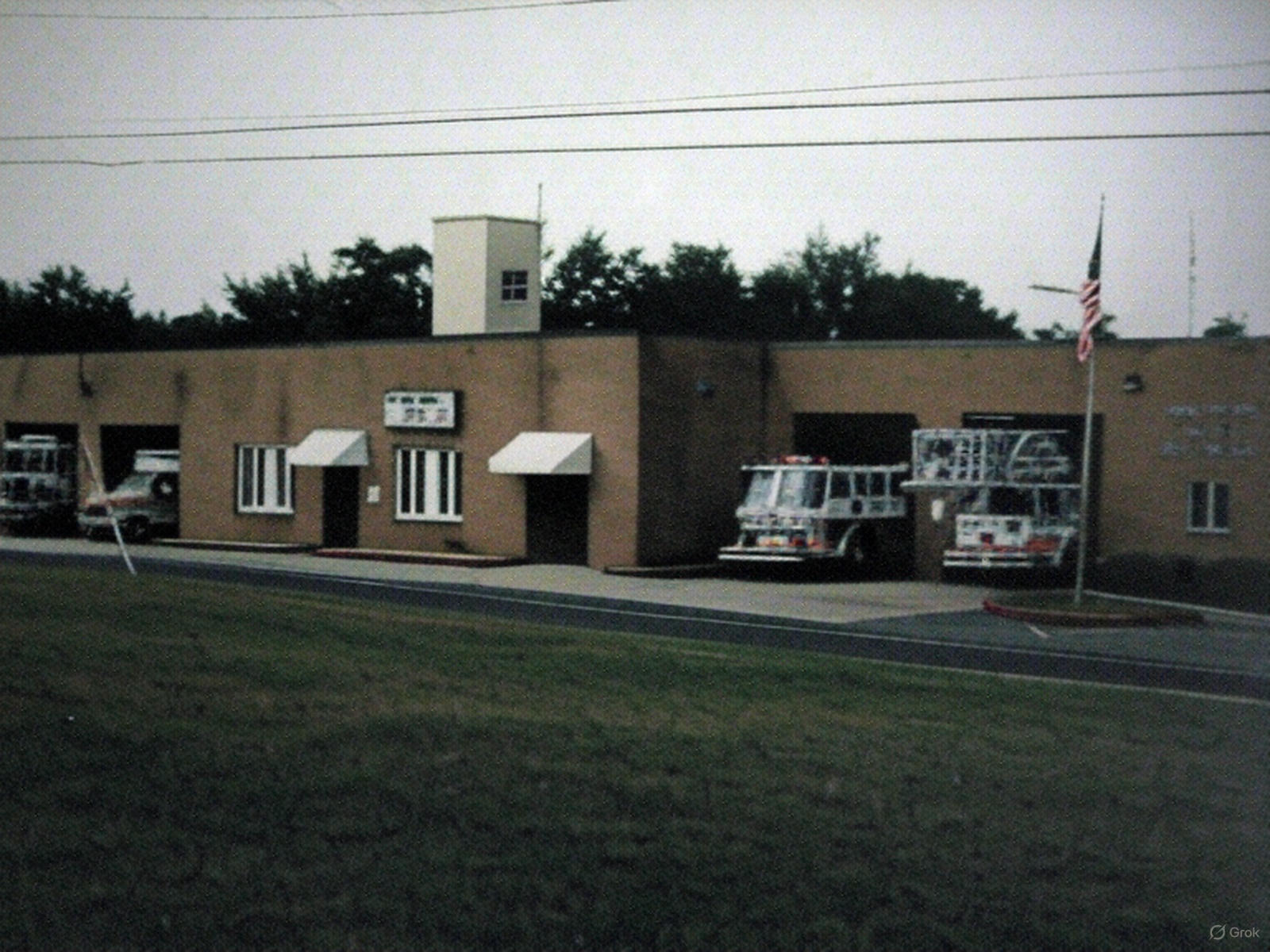
A new fire station was constructed and dedicated in 1995 on Abingdon Road, not far from the original. In 2006, a new station was built in Willoughby Beach to replace the one constructed in the 1970s. These modern facilities were designed to continue the mission of emergency response well into the 21st century.
Today, Abingdon Fire Company proudly serves thousands of residents from its two stations—Abingdon Road and Willoughby Beach Road—meeting growing community demand with dedication and professionalism. The company operates a fleet of modern apparatus including a Quint, a Heavy Rescue, a Rescue Engine, two Engines, and two volunteer-staffed ambulances. Supporting this mission is a dedicated Administrative Support Team that hosts community and fundraising events to sustain day-to-day operations.
Evolution of EMS
Among the most significant changes has been the evolution of EMS operations. What began with a coach-mounted Oldsmobile carrying basic equipment has developed into a highly advanced system. Today’s ambulances feature liquid spring suspension for improved patient comfort, electric power-load stretchers to improve clinician safety, and advanced life support technology.
Ambulances now carry Lifepak 15 monitors capable of acquiring and transmitting EKGs directly to hospitals, triggering specialty care alerts. They also provide defibrillation, cardioversion, pacing, and vital sign monitoring. Additionally, over 30 life-saving medications are carried onboard. Paramedics are now being trained to use point-of-care ultrasound for rapid internal assessments—further enhancing emergency care.
Generations of Abingdon volunteers have earned EMT or Paramedic certification, continuing a tradition of service and mentorship. As the community expanded, Harford County established a countywide EMS Operational Program, now managed by the Department of Emergency Services. While the county’s career EMS division handles the majority of incidents, they continue to work closely with volunteer agencies like Abingdon, which proudly operates two volunteer ambulances.
Into the Future
Abingdon Fire Company remains steadfast in its mission: “Protect the lives and property of the citizens of our community and Harford County.”
This enduring commitment traces back to Will Harwood’s pivotal words in 1925: “Let’s not carry buckets, let’s get a real fire engine.”
As Abingdon Fire Company celebrates its 100th anniversary, continued growth has led to plans for a new substation in the Belcamp community. In partnership with Harford County Government, this new facility will house a fire engine and a career EMS unit from the Harford County Department of Emergency Services—further improving response times and expanding service capabilities.
This is our proud history—and what we accomplish today will become the history passed on to the generations that follow.